
The semiotics of the Barefoot Musician

Everyone is performing without shoes these days, so of course this calls for an analysis of the barefoot musician signifying chain.

The signifier and the signified
Semiotics is the study of signs. Most of the groundwork in this field was done by the Swiss linguist and philosopher Ferdinand de Saussure, who contended that signs are made up of two elements: the signifier and the signified.
A signifier is anything that communicates meaning. It is the form that the sign takes, and it can be anything — a word, an image, a sound, an act, or even a flavour or an odour (see: advertising). The signified is the concept that appears in our minds when we encounter the sign. To use Saussure’s example, the word “tree” is of course not an actual tree, but we understand what the linguistic sign signifies through cultural experience. In other words, we can immediately visualise what is being communicated through the sign.

Essentially, semiotics is a system of distinctions. A sign is defined by its relationships to other things; we know what red means, because it is not blue, and we know what light is because it is not dark.
It is important to note that meaning in the sign system is completely arbitrary; meaning is not fixed or stable. In fact it is created by social convention — it is cultural — and thus the meaning of signs can change. There is nothing “treeish” about the word “tree”, for instance; “tree” is simply a signifier that developed out of a particular culture over time.
The sacred and the profane
And what is culture? Culture is religion. We are, all of us, religious beings. If you stop at a red traffic light or a stop sign, you are religious. If you return your trolley to the trolley bay after doing your shopping, you are religious (credit to Plastic Pills for that example). More examples of religious behaviour include:
Clinking glasses with friends at the bar
Dressing appropriately for an occasion
Whispering in a library
Walking on the correct side of a footpath
Saying “bless you” when someone sneezes
Religiousness is simply any learned cultural behaviour whose effect is the creation of social cohesion. We show in our daily actions that we are believers through our adherence to and acceptance of the signs, symbols and totems that form a wider system of mythology which dictates social codes.
As the French sociologist Émile Durkheim argued, religion is humanity’s most fundamental social institution. The idea that we live in a secular society is an illusion. Capitalism is not really an economic system at all, you see; it is a sign system — a sign system which communicates meaning based on the logic of its mythology.
The French structuralist Claude Lévi-Strauss, who later offered his own critique of Durkheim, further demonstrated in his work The Savage Mind (La Pensée Sauvage) that totemism is not a pre-modern, pre-logical way of thinking. In fact, totemism is an empirical system of classification which he called “the science of the concrete”, based on binary opposites. This antithetical thinking orders the environment using the same fundamental operations as modern science, with the only difference being the level of abstraction. Thus, he argued, society today is just as totemic as any “primitive” human society. The modern totem comes in the form of the commodity; car models, sports teams, political symbols — they create group distinctions which are functionally identical to clan totemism.
It was also Claude Lévi-Strauss who said that “the creator of music [is] a being like the gods”, and indeed, this is how modern musicians think of themselves. Within the mythology of late capitalism, then, this archetype of the divine musician is expressed in the Barefoot Musician signifier, whose implicit meaning we all understand, again, because it has been culturally learned.
Durkheim rejected the wisdom of his contemporaries, including that of his fellow sociologist Edward Burnett Taylor, who defined religion as a “belief in the supernatural” — a claim which seems to prevail to this day. Rather, in The Elementary Forms of the Religious Life, Durkheim argues that one of the defining features of religion is the dichotomy of the sacred and the profane, and that all human societies organise themselves into these two categories.
The profane refers to the mundane, ordinary, every-day aspects of life. These are dirty things which need to be separated from the clean — the sacred. The sacred refers to anything that is set apart from every day life, including taboos, customs and rituals. Communal bonds are forged through rituals and taboos reinforce social hierarchies through the forbidding of certain actions or behaviours. The sacred and the profane can never mix, and breaching these norms usually gives rise to punishment or ostracism of some kind; thus the social order is maintained. It is important to note, however, that the sacred/profane dichotomy is not akin to the good/evil dichotomy, as both can be either good or evil.
So now that all of that is out of the way, let’s get into feet.
The barefoot signifier
“Take off your sandals, for the place where you are standing is holy ground.” — Exodus 3:5
Using Durkheim’s framework, we arrive at our main signifiers:
Shoes = Dirty (profane)
Feet = Clean (sacred)
Shoes have long been considered dirty in most human cultures. In Abrahamic religions, shoes must be cast off for the encounter with the divine, as shown by the above Biblical command from God to Moses. Muslims must remove their shoes before entering a mosque or walking on prayer rugs, ensuring that the prayer area remains ritually pure (tahir) for prostration, where the forehead touches the ground. Shoes are forbidden indoors in the Arab world, and showing the sole of the shoe, as the lowest and dirtiest part of a person, is a grave insult. Hindu scriptures emphasise that “purity should exist both externally and internally” (Shaucha), so footwear should be kept outside of homes and consecrated zones. Before entering a Hindu temple, taking off one’s shoes is the symbolic surrender of the ego.
“Those free from pride, attachment and illusion move closer to the Divine.” — Bhagavad Gita 15.5

The removal of shoes indoors is also widely practiced in most parts of East Asia where floor-centric living is common. In Japan, for instance, footwear is to be left in the designated area (genkan) separating the outside from the inside, and the wearing of shoes on tatami mats (which are reserved for tea ceremonies, meditation and sleeping) is strictly forbidden. Japanese households even feature special slippers worn exclusively in the toilet (another unclean area). Like in Hinduism, bare feet in Buddhism signify the renunciation of worldly status, as well as humility and direct contact with reality without artificial barriers. Buddha himself is depicted without shoes, and stone or carved footprints of the Buddha (Buddhapada) are revered as sacred symbols of Buddha’s enduring teaching. Bowing down and touching the feet of a deity’s statue is a gesture of reverence and humility in Hindu, Buddhist, Jain and Sikh traditions.
While the barefoot signifier can also communicate the sinfulness of poverty in some sign systems (namely the Calvinist propaganda of the Reformation, which made the rise of capitalism possible), since the hippie movement in the 1960s, it has now become a Silicon Valley aesthetic. Tech CEOs and billionaires such as Steve Jobs, Mark Zuckerberg, Mark Cuban, Elon Musk and Adam Neumann now appear in public or in formal settings sporting bare feet. The message here is that traditional corporate dress (featuring tailored suits and polished shoes) once signalled power and status, but now in fact it signals a submission to power. It is an indication that the status of tech oligarchs is such that the standard rules of decorum do not apply to them.


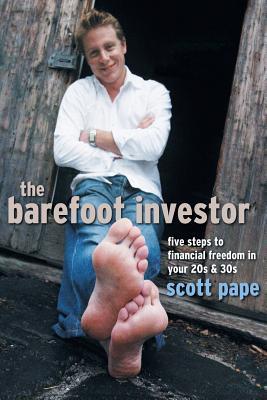

The aestheticisation of poverty is seen not only in the barefoot billionaire trend, but it also happens to coincide with “poverty porn”, “poverty tourism”, various forms of nostalgia for pastoral life (including off-grid living and the tradwife trend), as well as “alternative” medicine trends such as “energy healing”, a proponent of which is “earthing” (walking barefoot on the Earth). Whereas spending long periods of time outdoors in nature once indicated manual labour and low social class, today the ability to “switch off” from the modern world and connect with nature and is now a luxury reserved only for the wealthy, and so the barefoot signifier has been reversed. This longing for a “return to nature” is rooted in something reminiscent of Marx’s theory of alienation, where capitalism alienates us from everything that makes us human, including our own biology. The fact that it has been deemed necessary to put a term to the fairly normal and rudimentary act of walking on the ground in bare feet, as if it is some recent innovation or discovery, shows how severed this connection has become.
Poverty itself is now a commodity, as there is nothing left for the market to commodify, and nowhere is this phenomenon more explicit than in the fashion industry.

The semiotics of Balenciaga’s sanctification of dirty, decrepit shoes here indeed warrants a discussion for another time, but what does all of this mean for the barefoot musician? Apart from the clean/dirty signifiers, there are other many other signifiers associated with bare feet. Since we are trying to determine why going barefoot is in this case preferable to wearing shoes, we must analyse barefoot mythology in terms of some of its possible positive connotations and their corresponding semiotic oppositions.
Barefoot | Shoes | |
Signifier: Signified: | Lack of protection Vulnerability, honesty, authenticity | Protection Guardedness, dishonesty, deceit |
Signifier: Signified: | Natural Innocence (realm of the divine) | Unnatural Corruption (realm of the human) |
Signifier: Signified: | Poverty Virtue, humility | Wealth Vice, pride |
Signifier: Signified: | Freedom Self-expression | Bondage Tyranny |
Signifier: Signified: | Unconventional Unique, special, interesting, radical | Conventional Normative, conformist, boring |
Signifier: Signified: | Anti-material Revolution | Material Pro-capitalism |
Not unlike the Silicon Valley tech lords, the barefoot signifier here communicates that the barefoot musician exists in a separate, sacred realm in which they have transcended the material. In turn, it can also be read as a radical protest against consumerism, the aesthetics of which then become a central part of the musician’s marketable brand. Theodor Adorno writes about this contradiction as part of his dialectic, specifically where he discusses the Culture Industry, pointing out that capitalism maintains the status quo by co-opting ideas of revolution, re-packaging and selling them as a consumer experience. The market sells us the wisdom of capitalism, you see, but it also sells us the wisdom of anti-capitalism.

Barefoot Musician Semiotic Square
Greimas’ Semiotic Square, which is now used in brand myth-making through advertising, logo design and the creation of corporate jargon, was developed as a tool to analyse the semiotic relationships between binary opposites. It looks like this:

So, based on the signifiers we have identified above, we can now arrange Barefoot Capitalism mythology into the semiotic square:
Divine Musician (Barefoot) True prophets Anastasia Kobekina Patricia Kopachinskaja Alice Sara Ott Tim Minchin Jacob Collier The divine individual (capitalism) | Divine Non-Musician (Barefoot) Billionaires, CEOs, Silicon Valley businessmen (Mark Zuckerberg, Steve Jobs, Elon Musk, etc) Buddha Hippies (poverty romanticism) High performance sportspeople The divine individual (capitalism) |
False prophets Yuja Wang Lang Lang Esther Abrami Camille Thomas Normative musicians, orchestral musicians, the non-famous (socialism) Non-Divine Musician (Shoes) | People in uniform (Police, soldiers, the military) Audience members The anonymous general public; the collective (socialism) Non-Divine Non-Musician (Shoes) |
Barefoot Musician Signifying Chain
Jacques Lacan expanded on Saussure’s signifier through his development of the “signifying chain”, in which the associative links of a signifier combine to form a chain reaction. Using Lacan’s signifying chain, we arrive here at our final semiotic analysis:
In the mythology of Barefoot Capitalism, Famous Barefoot Musicians are semi-divine beings (True Prophets) tasked with delivering the Divine Message to the people. The Divine Message, of course, is that art is a sacred totem of Capital, and that all humans should strive to serve Capital (God) by becoming a spectacle of radical elite performance. This is the most virtuous path.



Non-famous Musicians (the orchestra, for instance) are those who form the Clergy, and the audience, the congregation. Famous Barefoot Musicians present themselves at the centre of the sanctified stage of the Concert Hall (the Altar of the Temple) barefoot because they are in direct contact with the divine (Capital) and as such are more pure. They are also endowed with the responsibility of the Divine Assignment.


The Divine Assignment as a Famous Barefoot Musician (True Prophet) is to serve as a sacrifice to Capital (God). In the ritual ceremony of the concert, the Famous Barefoot Musician (True Prophet) fully offers themself to Capital (God) as the ultimate self-optimised machine. The sacrifice is made in order to atone for humanity’s sin of being imperfect, costly, unreliable machines which are responsible for slowing down the growth of Capital.
True Prophets depicted meditating in red dress for the ritual blood sacrifice


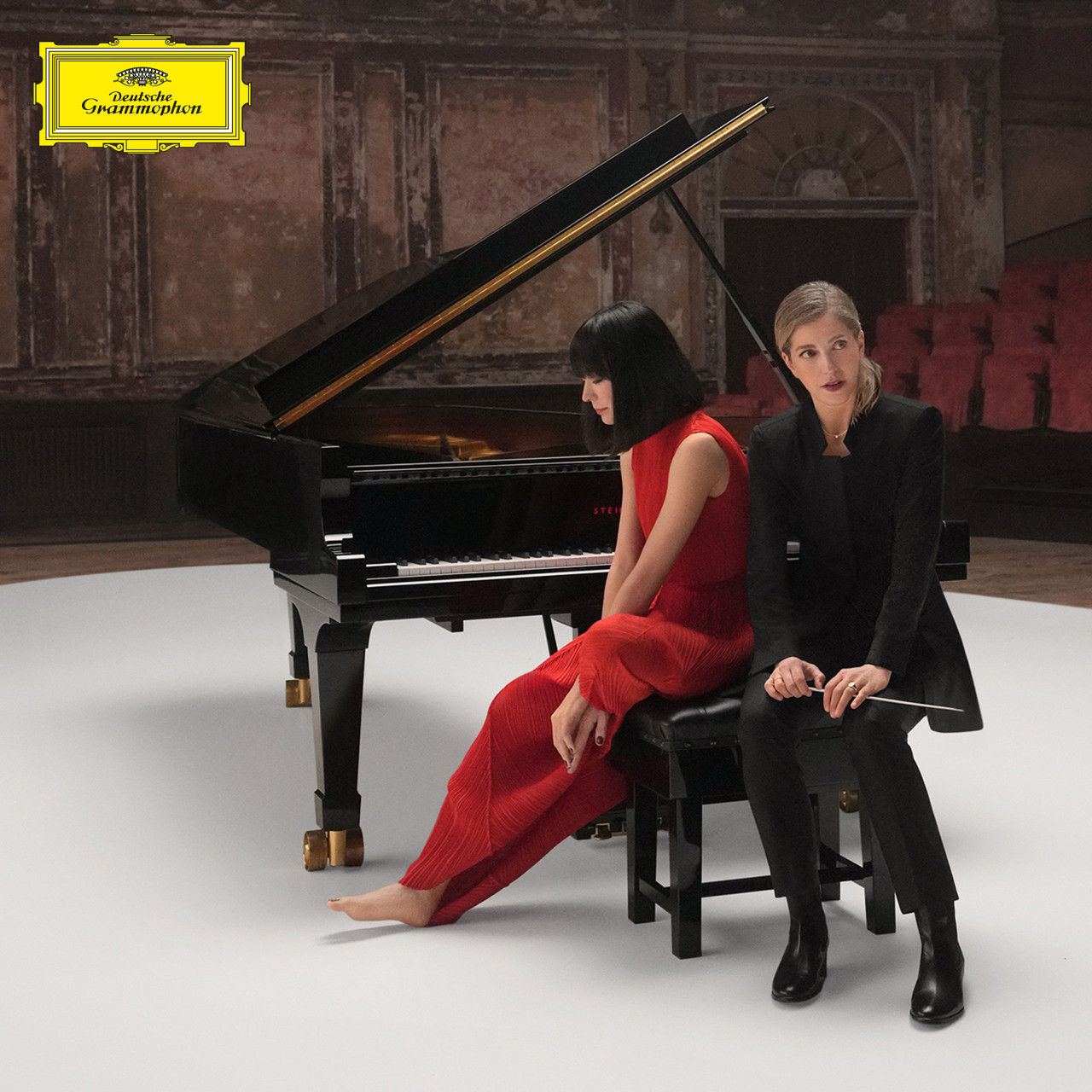
The sacrifice is made in the form of lifelong self-torture, devotion to work, and the conscious rejection of things such as higher paying non-artistic jobs, mental stability, self-compassion and fun. Thus they embody the virtues of chastity, asceticism and poverty, and they do this willingly, with authentic joy and without resentment.
True Prophets
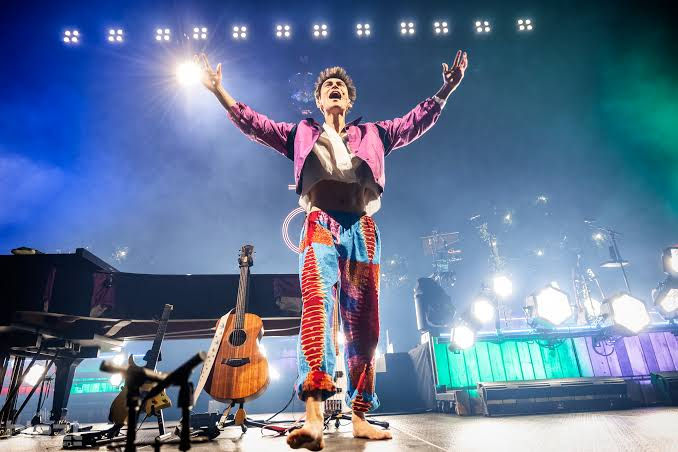

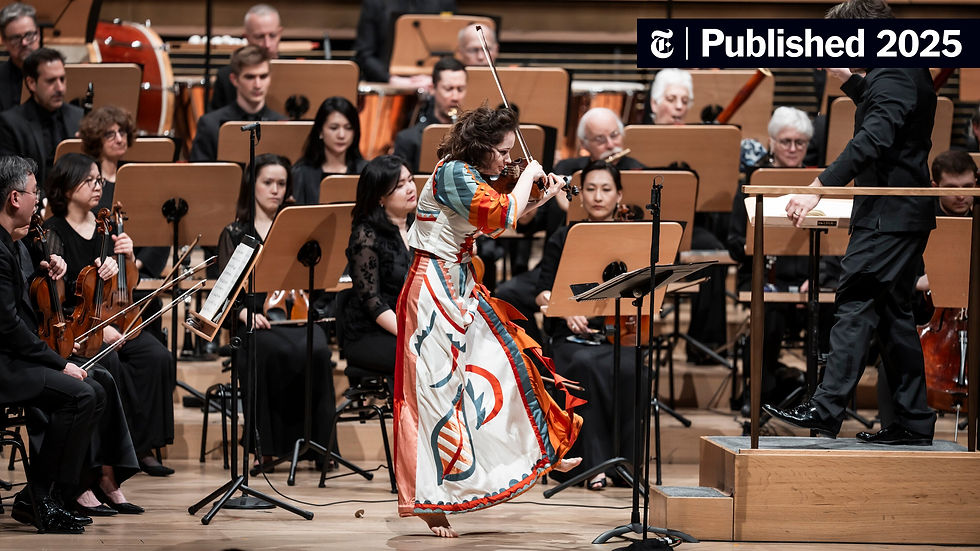
Non-Famous Musicians (Clergy) also practice self-sacrifice in order to prove their worthiness to Capital (God), but to a lesser degree because they are not of the divine. They wear shoes as they are more sinful than Famous Barefoot Musicians (Prophets).
Famous Musicians who wear expensive or loud shoes are False Prophets. They spread the false teaching that art today is superficial (i.e. profane). They appear unashamedly embracing worldly glory.
False Prophets


And that’s it! Hope you enjoyed this one! Until next time...


Comments